A View So Stunning It Feels Like a Lie
Is the US Men’s National Team a dead mall?

Funny Games is a limited event series both about the World Cup and not.
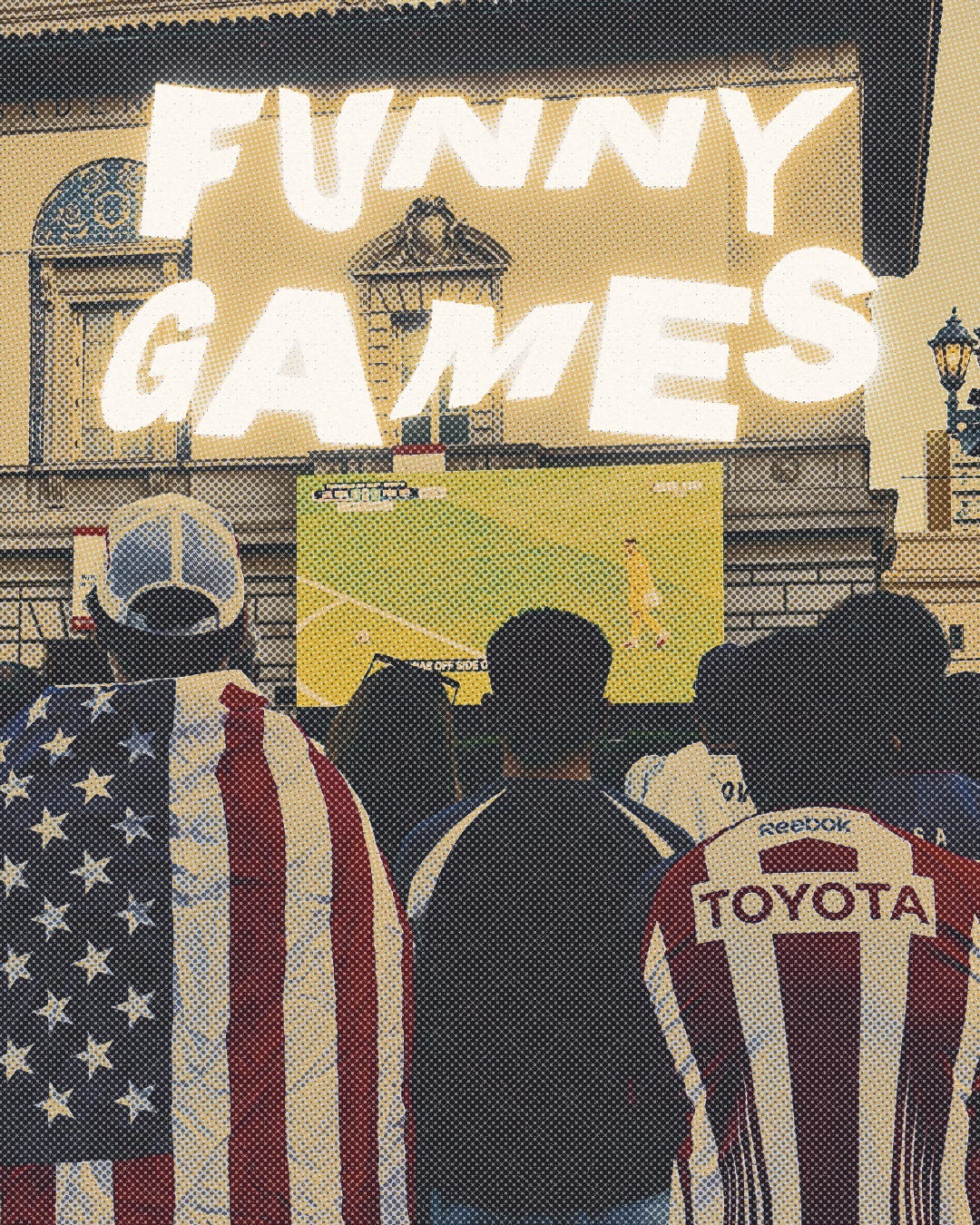
We’re one week in, and already have our first hero of the tournament (Cape Verde’s goalkeeper, Josimar “Vozinha” Dias, who held Spain to a draw during their World Cup debut); Scottish fans drank Boston dry (tripling St. Patrick’s Day sales); Lawrence, Kansas, embraced Algeria in the rain with tearful joy (their very own Mr. Darcy moment); the English are singing “Wonderwall” at Texas rodeos (everyone knows the words); all while Mexico and Korea are having a party for the ages (Grimace is Mexican now).
It’s a good reminder that the beautiful game ultimately belongs to the people.
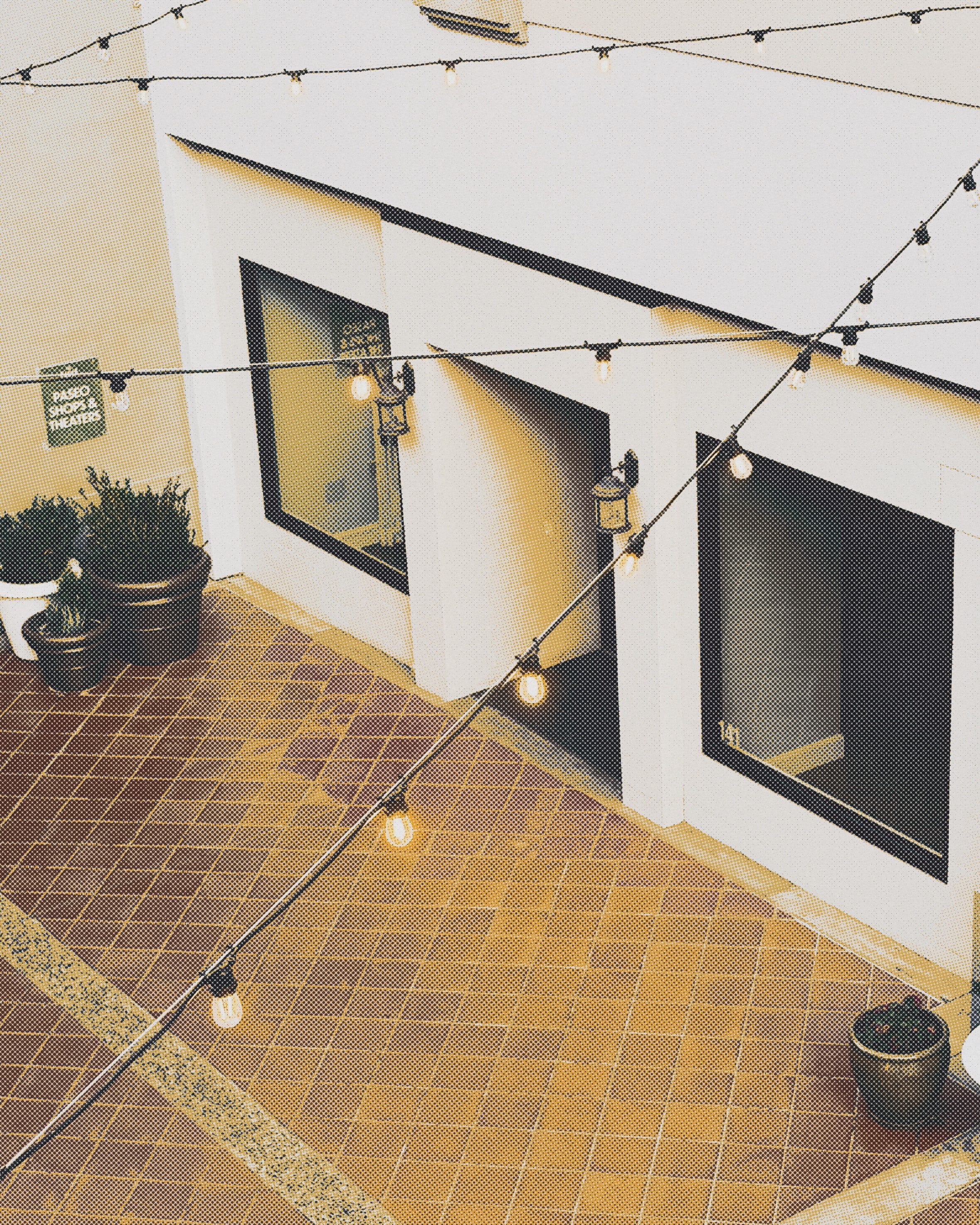
We caught the US Men’s National Team’s opener at a watch party in Pasadena (the birthplace of Julia Child and where Jackie Robinson spent his formative years). It was a thrilling match, and some of the best soccer we’ve ever seen from the Americans. But as we navigated the M.C. Escher-like stairways at a nearby mall during halftime, we couldn’t help but feel a connection.
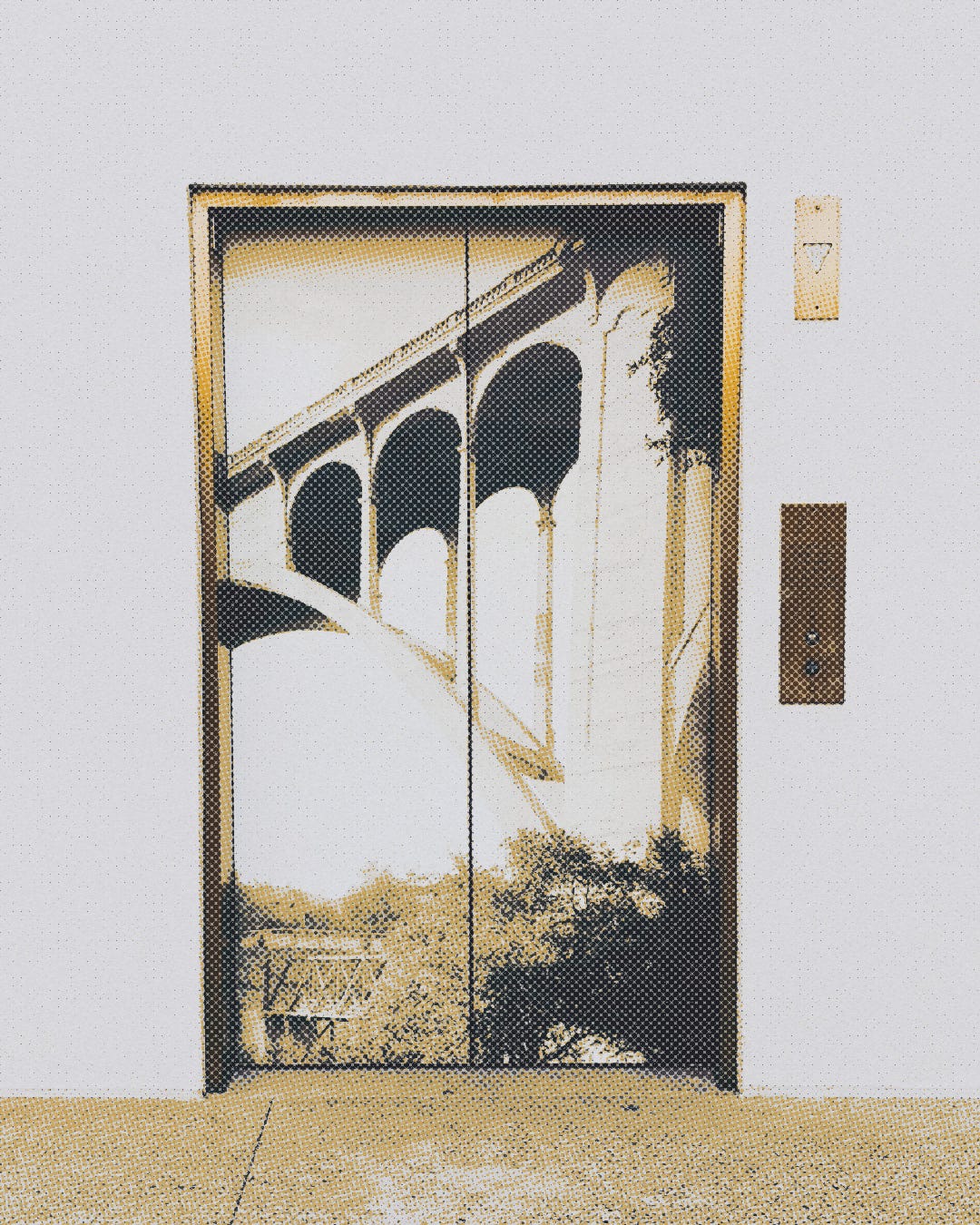
A VIEW SO STUNNING IT FEELS LIKE A LIE
In late 20th-century America, the mall was king. It was a place to go, somewhere to loiter, bug your friends, maybe see your crush at Hot Dog on a Stick—to consume and be consumed. It was a hub of activity, centered around commerce and comically large fountains. In life and film, a gathering place.
In the wake of the Great Recession, the mall began to die. Empty storefronts, empty food courts, empty parking garages, shells of shells of spaces. They became weird and eerie odysseys through consumer patterns that have come and gone, purgatories that shaped themselves around Abercrombie and Hot Topic. What once was flourishing, now a ghost story—increasingly popular for urban exploration and as an internet aesthetic. Those tactile, glacial egresses bathed in grave fluorescent became known as liminal spaces.
We have lived with the concept of liminal space since before porn was banned on Tumblr, be it in the films of George Romero, most notably 1978’s Dawn of the Dead, or in the hauntological writings of Mark Fisher, before cementing itself in popular culture through Dan Bell’s seminal Dead Mall Series on YouTube, and, most recently, in the breakout success of Backrooms.
“What haunts me is not exactly the absence of literal space so much as a deep craving for metaphorical space,” writes Naomi Klein in No Logo: Taking Aim at the Brand Bullies, “release, escape, some kind of open-ended freedom.”
Some seek to resuscitate these cathedrals with Hail Marys—anchor attractions and big box stores in the outer reaches of parking lots. Some have lowered rent to allow for more third spaces. You can guess which approach has seen success.
The last time the United States hosted the World Cup was the summer of the Northridge earthquake, the tournament beginning the same day OJ Simpson drove his White Bronco down the highway. It was supposed to be a major turning point for the US Men’s National Team (“USMNT”): the charismatic, blue-collar squad—featuring Alexi Lalas, Marcelo Balboa, Cobi Jones, and Tony Meola—captivated our imagination, making it to the Round of 16 for the first time since 1930. Brazil would ultimately win the competition, defeating Italy in the final at the Rose Bowl in Pasadena.
In the decades since, the USMNT has failed to make good on that shown promise—overshadowed by the US Women’s National Team (“USWNT”), the most successful team in international women’s soccer. Their triumphs remain a dream the men are still chasing, bitterly.
“When the present has given up on the future, we must listen for the relics of the future in the unactivated potentials of the past,” writes Mark Fisher in The Metaphysics of Crackle: Afrofuturism and Hauntology. Much like the muzak echoing throughout the dead malls of YouTube, men’s soccer in America has looped back on the 1994 World Cup because it can’t imagine a new future. Every four years would be the year the sport would finally take off, as it did then, and like it will now, too.
And coverage of this tournament has been rooted in that nostalgia. Indeed, Alexei Lalas is still there—a vile, hollow shell with talking points sanitized for daytime television—his younger self badly drawn. It’s like describing a dog to someone who’s never seen a dog, then asking them to draw one. We are asked to believe that we will win, and so we do. It’s, like, a miracle.
Last Friday, the City of Pasadena hosted a viewing party in the space between the Paseo, an outdoor mall facing another mass exodus of retailers, and the Pasadena Civic Auditorium Plaza, a historic performance venue where Michael Jackson unveiled the moonwalk, transforming the street and plaza into a community event space.
The offense pushed—prowling and pulsing toward a US 4-1 victory over Paraguay. It was electric. The energy on the field was cohesive and, dare we say, joyous. It seemed like the Americans were actually having fun.
So-called Captain America and MAGA-underling Christian Pulisic played fine, pulled at the half to avoid further strain on a preexisting injury. Striker Folarin Balogun and centerfielder Malik Tillman made plays with real creativity and intensity. Propulsive at every turn, for the first time, again, it seemed like the USMNT was an actual team. Midfielder Weston McKennie said he wants their World Cup to feel like a pick-up game. And so far it has. But one game is just one game, miracles be damned.
In the end, we have to imagine an American on the pitch smiling—and people gathered to watch them—because otherwise what’s the point?