

Born Free
On the wild horses of Tehachapi and the streets of Bakersfield

Look Horses: Some Equine Histories of Los Angeles was a series both about horses in the Southland and not. This is the conclusion.
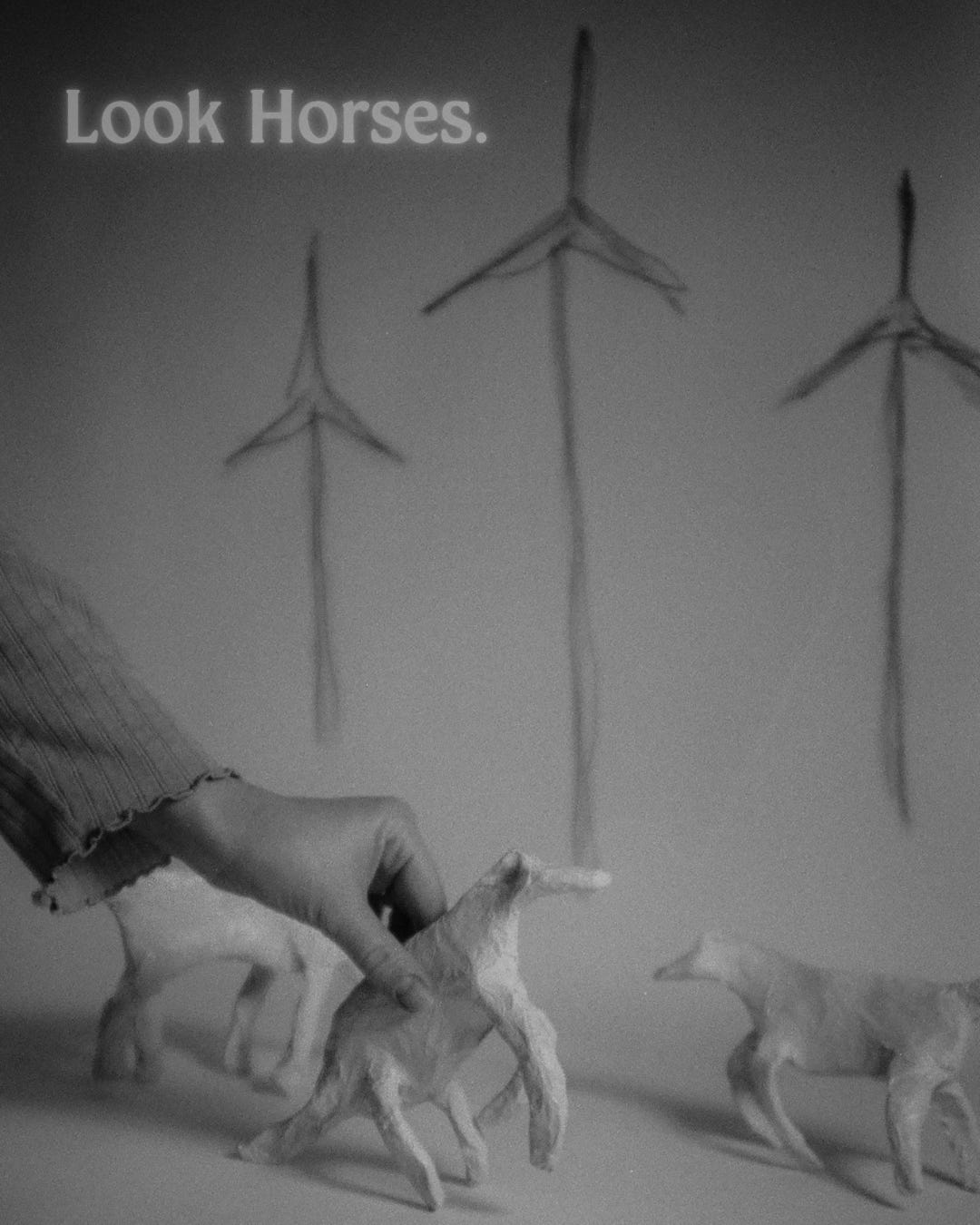
Ninety-five minutes north of Los Angeles, past the sunburnt strip-mall sameness of the Antelope Valley, its hidden gems, too, and straight through the Mojave’s arid edge, west of an airplane graveyard they call the Boneyard, the Tehachapi Mountains preside.
Nestled at their feet, in a soft canyon lined with oak trees, a herd of wild horses with mysterious origins graze a curious landscape. We set out to find them, loading the car with enough supplies for a day and a night and the day thereafter in the mountains above the desert.
At first, the angular drive stretches the barren and beautiful over enclaves of suburbia. An occasional Joshua tree reaches toward the sun.
We’re seeking something like Tom Mix jumping Beale’s Cut, but without the good horse long buried beneath a parking lot in Silverlake—a mystery, alive.
In Adaptation (2002), Charlie Kaufman’s fictional twin brother Donald (both played by Nicolas Cage) explains a scene from his in-progress screenplay: It’s a chase. A man flees on horseback, pursued by another riding a motorcycle. They are both the same man. It’s meant to represent “technology v. horse.” That’s the image.
We turn off Highway 14, and the undulating road begins to crumble like teeth in dreams.
* * * *
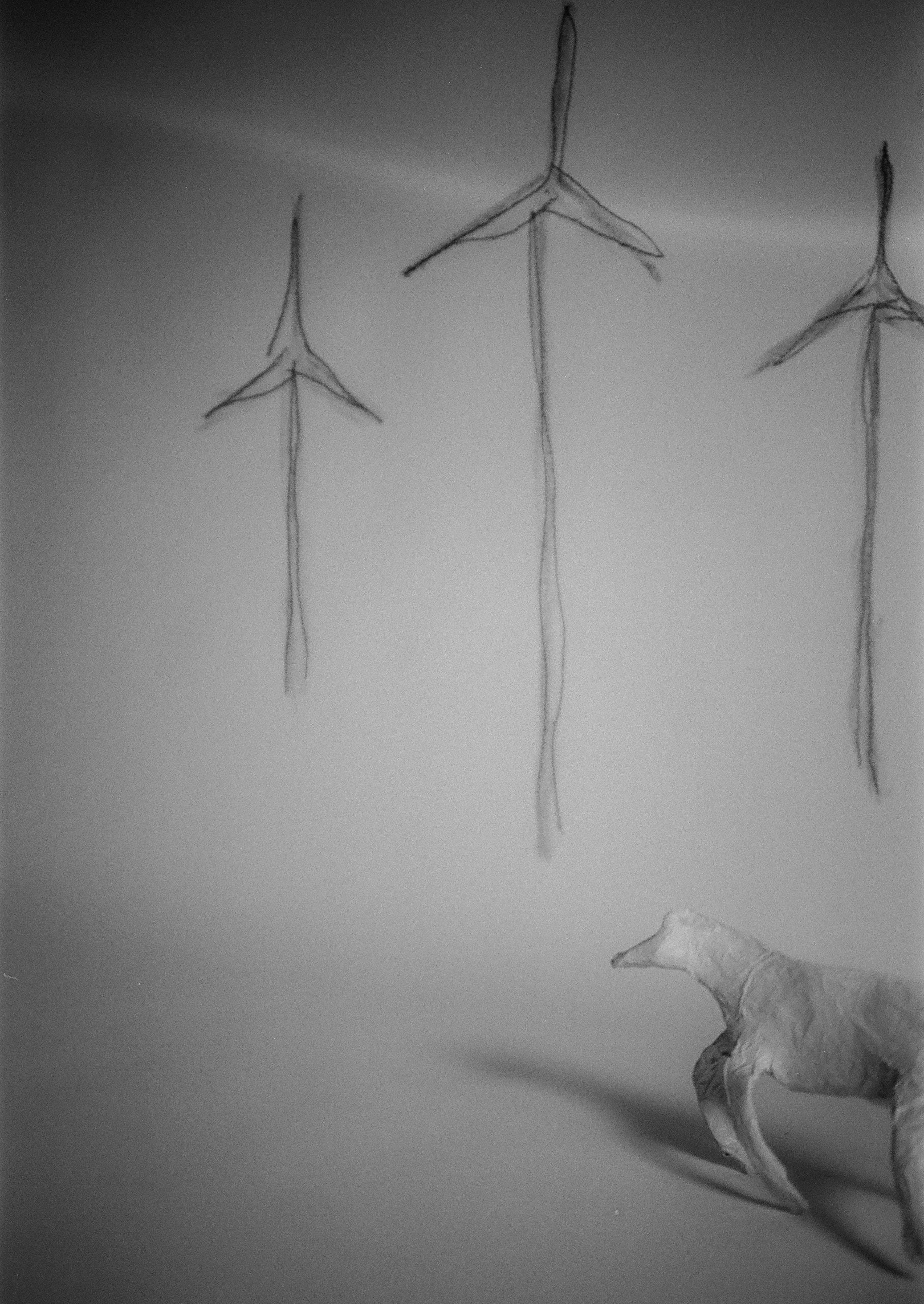
We awake in a land of giants, drifting up and over hills, green and patchy brown. Hundreds of wind turbines line the hills, towering in the sky, casting vast shadows and turning, almost lumbering, in the wind.
The Tehachapi Pass Wind Farm is one of the first large-scale wind farms in the country. Built in the early 1980s, the farm is one of five that make up the Tehachapi Wind Resource Area, the largest in California, covering some eight hundred square miles and producing a combined 3,507 megawatts of renewable energy.
A band of thirty jet black and iridescent chestnut horses runs along the side of Tehachapi-Willow Creek Road. They move from rolling hill to rolling hill, in the shade of the turbines, waiting for us. Unlike their domesticated cousins, these horses are smaller, scruffier, with wispy beards and tufts. But they do tilt their heads, noting our presence, before moving along. We found what we were looking for.
The herd known as the Oak Creek Wild Horses has been seen in this area since the 1940s, something of a local legend. Today, three or four bands make up a herd that circles one hundred horses, living off the land with a little support from helping hands.
Diana Palmer has been caring for the herd since the 80s, when she discovered them on the land she and her late husband were hired to manage. As a caretaker, Palmer provides the herd with food and water during dry seasons and adopts out foals when the herd grows larger than the land can accommodate.
While the true lineage and origins of the herd remain a mystery, most people seem to agree on one thing: They’re Morgans. Or, likely Morgans.
Morgan horses, unlike Mustangs and Apaloosas or the cowboys’ beloved Quarter Horse, do not come from the West. The first Morgan horse was a bay colt named Figure, born in Massachusetts. Hailing instead from the northeast—Morgans are hardened symbols of the American frontier, compact and refined.
They say that the Oak Creek Wild Horses could have belonged to Tehachapi-based breeder Roland Hills, who obtained some of his stock from Richard Sellman, a Morgan horse breeder in Texas. During a time of severe drought, Hills headed north.
Perhaps they escaped, or were otherwise abandoned by Hills, or perhaps the Oak Creek Wild Horses are tried and true to their meadow, fond of their bitter acorns, the cold creek, and now, their turbines too.
* * * *
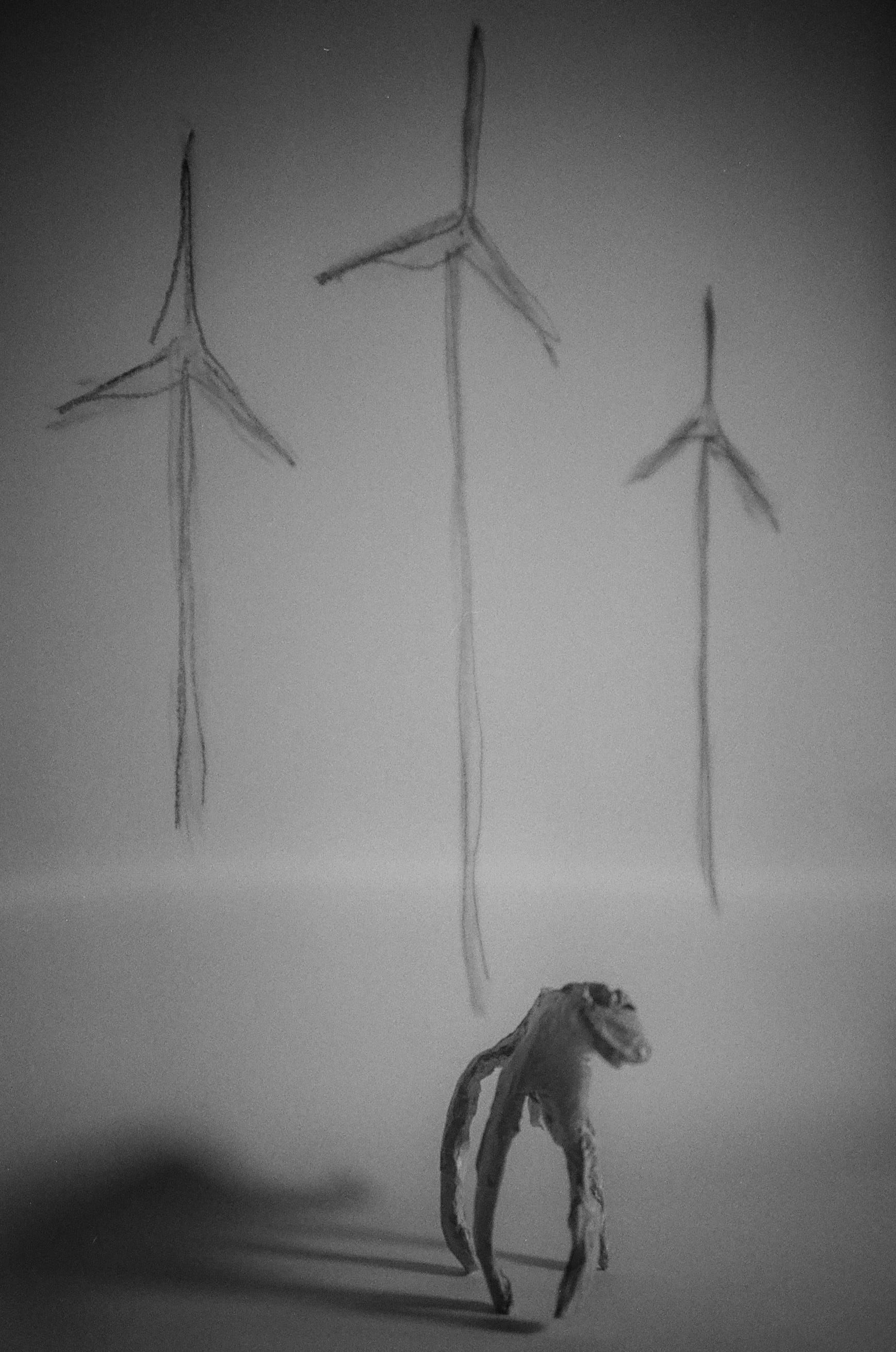
Some say that Equus occidentalis, the Western Horse, migrated across the continent bridge to Asia and Europe, becoming something different. The ones who stayed died in the ice.
When horses returned to North America, they came with the conquistadors. Herds of war, some managed to escape and to remain. Over plains, stony deserts, they roamed, often at odds with the landscape. Not all of these horses are ancestors of the conquistadors; some have simply escaped captivity and, amazingly, survived.
As of March 2026, the Bureau of Land Management estimates there are 61,523 wild horses in the United States, 3,534 of them here in California, from Sacramento to the Anza-Borrego Desert.
On public lands across America, there is an ongoing debate over how best to manage these mustangs and their impact. It’s a conversation between conservationists and capital. An invasive species or spiritual figures? Of course, it’s both.
* * * *
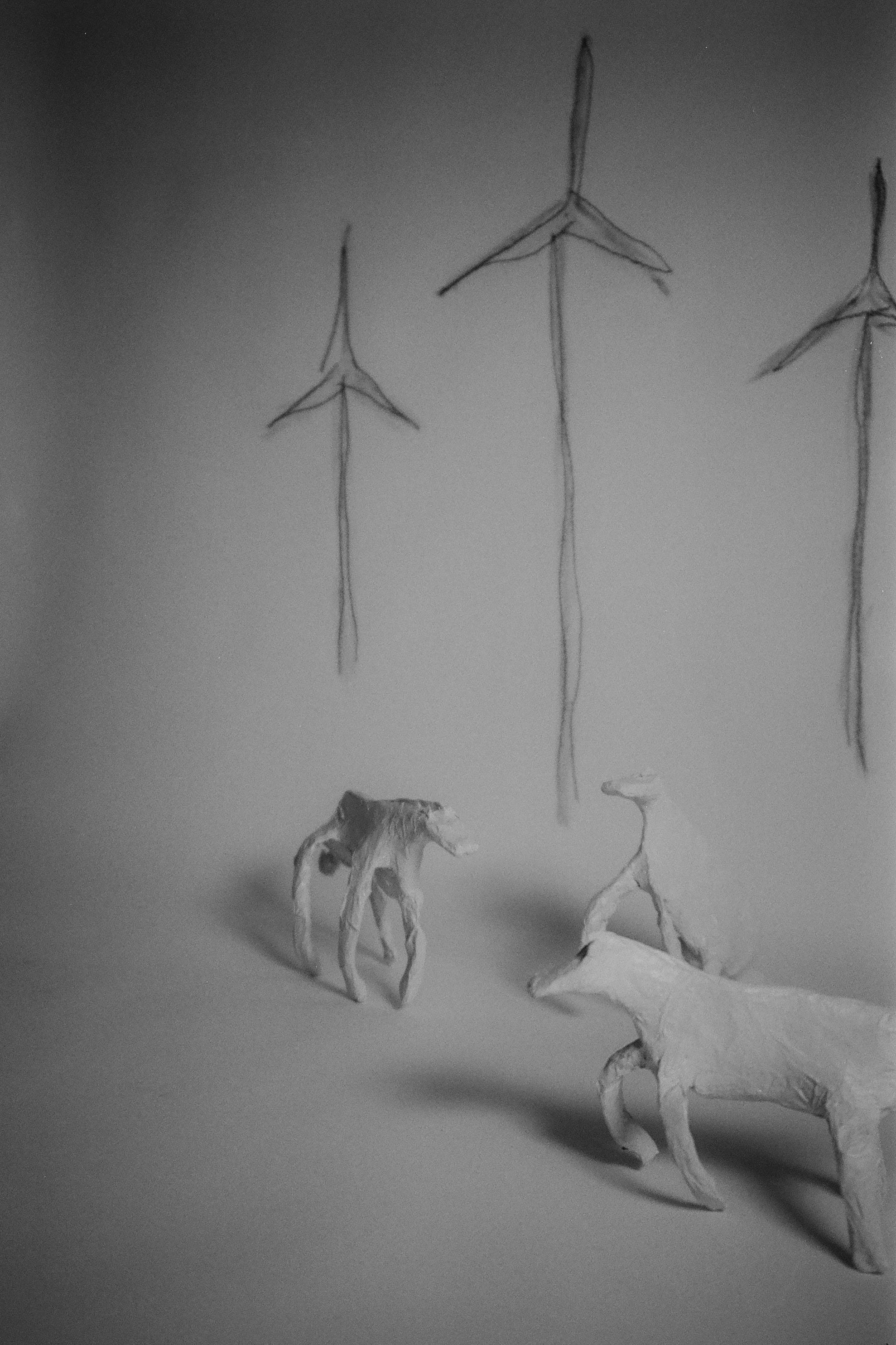
We descend into the San Joaquin Valley as the sun begins to set, filling up the car and grabbing a punnet of raisins at Murray Family Farms before heading to Bakersfield for the night.
On the radio, that tin, simple sound—picking up speed. It’s the Bakersfield Sound, pioneered by country legend Buck Owens. Owens, like the Oak Creek Wild Horses, came to California from Texas. It was here he made his mark.
We find a table in the bar at Wool Growers to watch the Dodgers play Game 7 of the World Series. Like Eve Babitz said, we’ll have fun. Nestled between a group of kindly, drunk men, a lonely, miserable Padres fan, and a post-dinner party of middle-aged couples, we hunker down for a seven-course meal, the standard at Bakersfield’s Basque institutions. Pyrenees bread, vegetable soup, beans, salsa, marinated tomatoes, salad, french fries, pickled tongue, and oxtail stew. A group filters from the dining hall next door to another bar down the hallway. The innings proceed, the tipsy couples love Max Muncy. They leave when Miguel Rojas ties the game in the ninth, satisfied that all would be well.
As The Sundays’ cover of “Wild Horses” plays in the now-empty dining hall, whispers fill the room, or is it coming from the ballpark, either way, Will Smith hits the winning home run. Outside, fireworks.
In the morning, the streets of Bakersfield are quiet. Guthrie’s Alley Cat smells of stale puke, hot glass, wet brick. The Crystal Palace is closed for good.
We pull up to Panorama Liquors and stock the cooler with glass bottles of Squirt and novelty to-go cocktails. Across the street at Panorama Park, California begins and ends, plunging abruptly into the expanse below: miles and miles of oil rigs marching into the horizon.
In the Sierras, a gray wolf begins her journey south. Months later, she will appear in Los Angeles County, the first of her kind in more than a century.
And the American West wants us to believe that something can come from nothing.
Very bittersweet. Don't want to say goodbye to Look Horses!