The Past Is Prologue
The World Cup semifinals begin and end at a Sizzler in Downey

Funny Games is a limited-event series both about the World Cup and not. This week we ordered steak & lobster with a side of baked potato.
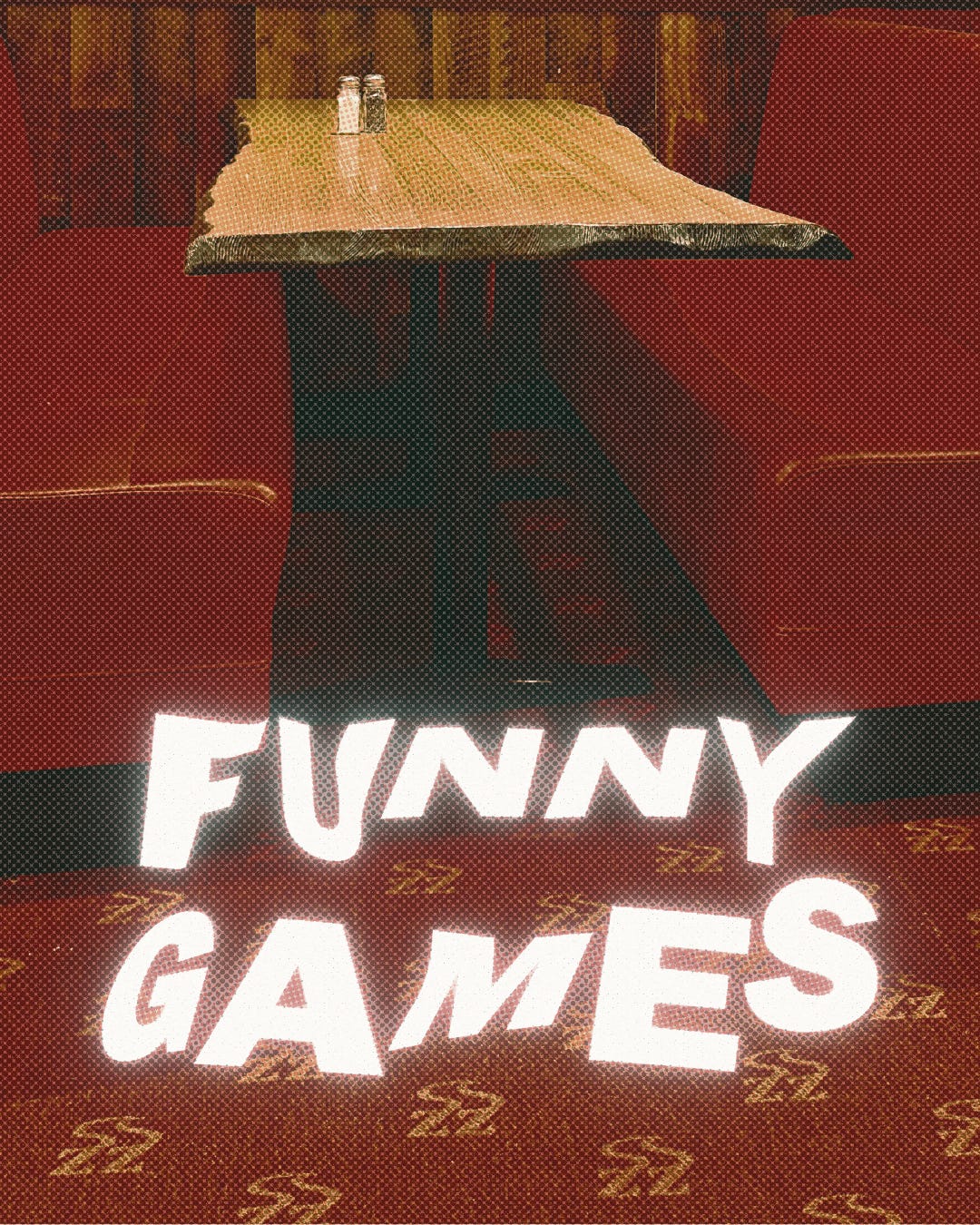
Sometime in 2013, Anthony Bourdain went to the Sizzler on South Vermont and discovered something that families in Southern California have known since 1958: There are no snarkologists at Sizzler. The iconic restaurant chain is a judgment-free zone that, caught between ritual and community, is its own beautiful game.
Originally opened by Del and Helen Johnson in a converted office trailer in Culver City, Sizzler hoped to create a lower-price-point steakhouse and ended up defining fast casual dining for generations. In the 1970s, the chain introduced its famous salad bar, and the company continued to grow and grow and grow. Thereafter, Sizzler infamously transitioned to a buffet-style concept, a move that proved disastrous. Locations closed, bankruptcy followed.
In 2023, the company brought on Tavern Agency to put the sizzle back in Sizzler. Tavern has branded its philosophy Modern Heritage, with a belief that the past can be excavated, reinterpreted, and redesigned. Tavern capitalized on the brand’s nostalgia factor and its sense of heritage, beginning with remodeling several locations, with the salad bar at the heart of the redesign, and introducing an entourage of new Taste Buddies, each inspired by a popular menu item and imbued with elements of 1950s Hanna-Barbera cartoons and mid-century Southern California.
Like the book says, we may be through with the past, but the past ain’t through with us.
Amid the primary red, the bountiful salad bar, and stacks of cheese toast, the successor Sizzler remains a gathering place for Southern Californians—celebrating a birthday, a dance recital, the end of a long shift, a Saturday—and, we found, a moon to the Los Angeles World Cup Fan Zones’ stars.
In a game that is also ritual, certain symbols repeat, necessitating reactions that require counter-symbols, and we found ourselves in that place where ritual and repetition reign.
Take, for instance, The Dive. The softest touch begins a balletic performance. Flying through the air, mouth agape. Crumpled on the pitch, twisting in agony for the referee’s observance. We get our first plate as the officiants consult VAR for a decision.
At the salad bar, it is important to start with what is essential: to choose whatever delights you. To walk through the entire production, creating a list of options and encounters, of items to devour, of challenges for your next plate. And from those observations, to grab at least one extravaganza: fried chicken wings, lying in a river of sauce.
As yellow turns to red, The Plea begins. Like saints in paintings, hands tell the story. Clasped in prayer to outstretched arms, did you not see what really happened? Genuflecting before the referee. But justice, whether right or wrong, or VAR-mediated, has been decreed.
It’s time for seconds, when desperation and desire begin to set in. Grab whatever you want. Make a spaghetti taco. Mix all the pasta salads together. The time to bargain is now. Retribution will come swiftly or not at all.
The Kick. Just the striker and the keeper now. The steps arching back, predicting the ball’s trajectory. Or is it a lie? The keeper dances on the line. A stutter step. Heartbeat-like and unfortunate. Quiet now. The leg swings back. Gone.
You do not need more, and yet, euphoric, you return for more. A palate cleanser of fruit, jello, both bright and red and viscous. You may be slowing down, but the push continues. We’re not done yet. There is still The Final Minute. It is either glory or despair or glory in despair. It is all or nothing, and then it is over. A drop to the knees in celebration or defeat. The tarot card, upright or reversed, is the same card in the end.
You stand for a final plate: Soft serve. And one last slice of cheese toast.
When bad news begets more bad news, with every corner of your life rounded by death, you might lose yourself in the spectacle, thinking that on this screen could be the nicest thing. To watch men play, gracefully twisting and turning; plead for their lives and country to an immovable referee, yellow card in hand; move frantically to make that final, desperate attempt in those final, desperate minutes. And then the spectacle takes the shape of something else—your dinner plate.
As you look around the table at the faces of your loved ones, you’ll answer again to the glow of the salad bar before and behind you. Each of you will laugh when others return with new combinations of previously untested items. A buffet of human experience.
And if each corner is rounded by despair and darkness, perhaps sharing the spectacle and the light found within will help you sharpen your points, regardless of what looms.
His name is Lionel Andrés Messi, and he was born on June 24, 1987, in Rosario, Santa Fe Province, Argentina, the third of four children of Jorge Messi, head of department at the Acindar pressed-steel manufacturer in Villa Constitución, and his wife, Celia Cuccittini, who worked in a magnet manufacturing workshop.